Week 2
Place Value
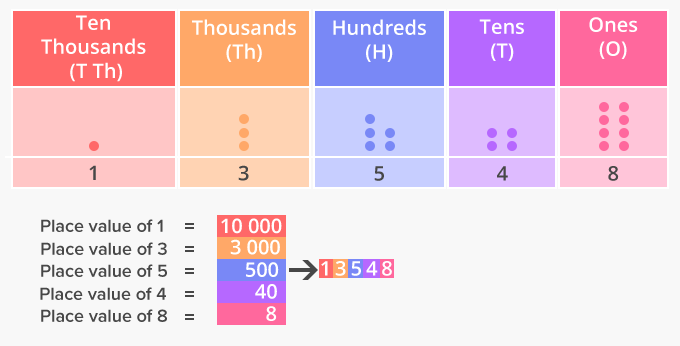
Numbers, such as 495,784, have six digits. Each digit is a different place value.
The first digit is called the hundred thousands’ place. It tells you how many sets of one hundred thousand are in the number. The number 495,784 has four hundred thousands.
The second digit is the ten thousands’ place. In this number there are nine ten thousands in addition to the four hundred thousands.
The third digit is the one thousands’ place which is five in this example. Therefore there are four sets of one hundred thousand, nine sets of ten thousand, and five sets of one thousand in the number 495,784.
The fourth digit is called the hundreds’ place. It tells how many sets of one hundred are in the number. The number 495,784 has seven hundreds in addition to the thousands.
The next digit is the tens’ place. This number has are eight tens in addition to the four hundred thousands, nine ten thousands, five thousands and seven hundreds.
The last or right digit is the ones’ place which is four in this example. Therefore there are four sets of one hundred thousand, nine sets of ten thousand, five sets of one thousand, seven sets of one hundred, eight sets of ten, and four ones in the number 495,784.
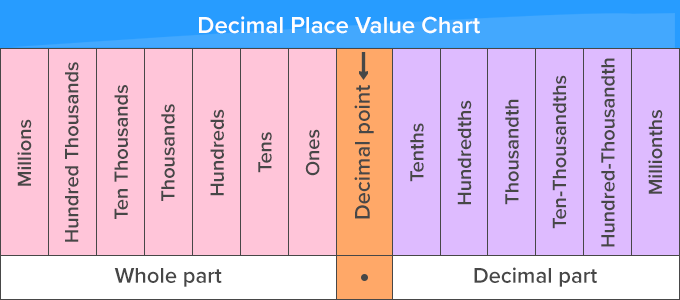
Decimal Place Value
Rounding
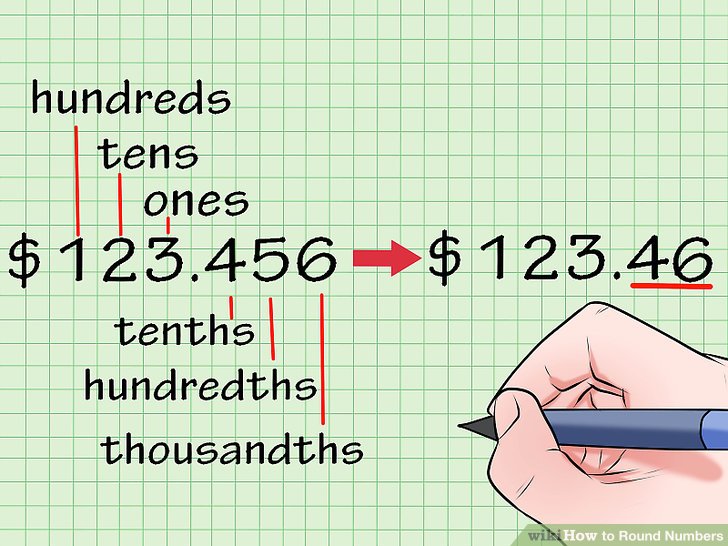
Rounding means making a number simpler but keeping its value close to what it was.
The result is less accurate, but easier to use.
Example: 73 rounded to the nearest ten is 70, because 73 is closer to 70 than to 80. But 76 goes up to 80.
There are many ways to round. This is the most common method:
• Decide which is the last digit to keep
• Leave it the same if the next digit is less than 5 (this is called rounding down)
• Increase it by 1 if the next digit is 5 or more (this is called rounding up)
Don’t forget to use the math antics login information
Greater Than/Less Than
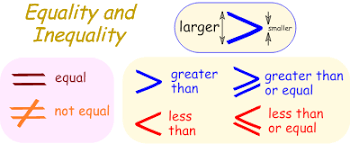
Comparing Large Numbers
Very often we need to compare large numbers to see which is the greatest or the least. If someone let you pick from two different amounts of money you would probably want the greatest amount!
Rules For Comparing Whole Numbers
The greater the number of digits, the greater is the number. (unless there are only zeros to the left of the number e.g. 007)
If two numbers have the same number of digits, the number with the bigger digit on the left hand side is greater.
If the leftmost digits are the same we compare the next digit to the right and keep doing this until the digits are different.
Important Note: These rules do not necessarily apply when decimals or negative numbers are involved.
Extra Practice/ Homework
Kaplan Book
- Pg. 220-221
- Pg. 240-241
 GED Program